
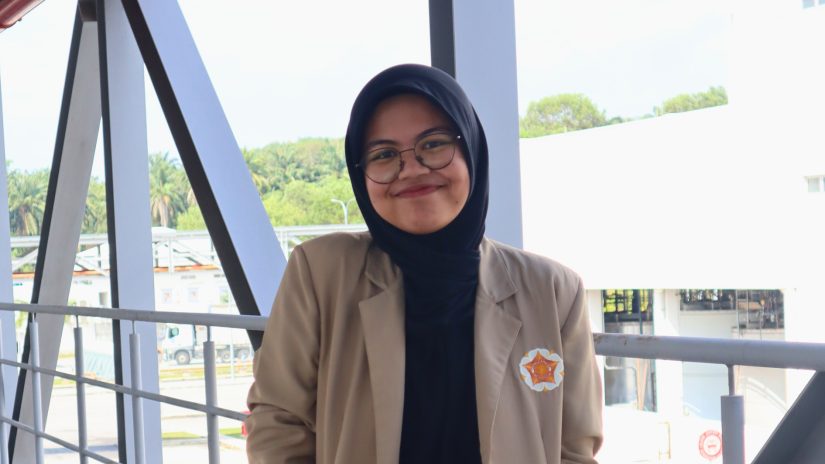
At UGM, the fast track program offers undergraduate students the opportunity to continue to a master’s degree earlier through a more efficient study pathway. Under this scheme, students can complete both their bachelor’s and master’s degrees in around five years, with the seventh and eighth semesters of undergraduate study taken alongside the first and second semesters of graduate study.
One of the students who chose this path is Devira Putri Rahmalia, a student in the Master of Agribusiness Management (MMA) Program at UGM who is now in the process of completing her thesis. She had actually known about the program since the beginning of her undergraduate years through faculty socialization sessions. Even so, like many students, she once felt unsure and went back and forth before making her decision. In the end, Devira chose fast track because she saw it as a meaningful opportunity. What mattered most to her was the efficiency of study time, especially because it matched her long-term interest in pursuing an academic path. She also felt that, as a program open to UGM students, it was an opportunity worth making the most of.
Choosing MMA UGM
Devira’s decision to continue her studies in the Master of Agribusiness Management Program grew naturally from an interest she had developed during her undergraduate years. From early on, she found herself drawn to agribusiness management, so when the time came to think about graduate study, MMA felt like the right place to continue.
What she finds especially interesting about the field is how closely management is connected to real conditions on the ground. At MMA, students do not only learn management in a general sense, but also explore how it applies within the agricultural sector. For Devira, that makes the learning process feel broader and more grounded, while also giving her a different perspective on agribusiness.
Research That Changed, but Stayed Connected
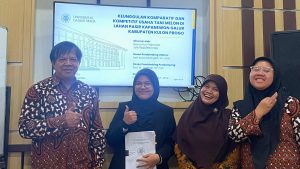
Looking back on her academic journey, Devira sees that the research she pursued in her undergraduate and graduate studies has not been entirely linear. During her bachelor’s degree, she focused on the competitiveness of melon commodities. In graduate school, her attention shifted to downstream development and value addition as one way of strengthening the competitiveness of cocoa commodities.
Even though the commodities are different, she still sees both topics as moving in a similar direction. In fact, the shift has helped her understand agricultural subsectors more broadly. For Devira, that change has not pulled her away from her field of interest. Instead, it has given her more room to grow within it.
The Challenge of Managing Time
For Devira, the most demanding part of the fast track experience has been learning how to manage her time. Taking graduate classes while also completing her undergraduate thesis was never going to be easy. Even so, she feels that the situation helped her become more productive, because each day pushed her to work through responsibilities one by one. She is grateful that she was still able to complete her undergraduate studies on time.
The challenge did not stop there. Once she entered the thesis-writing stage, she had to adjust her rhythm once again. As a fast track student in the odd-semester intake, she is required to complete the program within three semesters, which brings its own pressure. At this point, she says she is still learning how to manage her time so that each stage, from proposal writing to seminars, can move forward well.
Learning Inside and Outside the Classroom
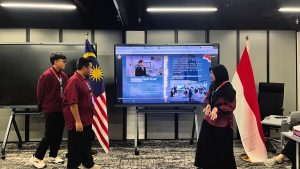
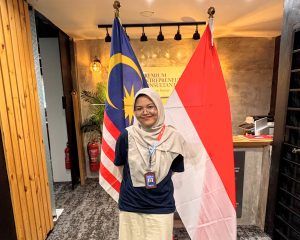
During her undergraduate years, Devira was actively involved in student activities. She joined the Information and Communication Department of the Agricultural Socio-Economics Student Association for two terms, took part in the Media Creation Ministry of the Faculty of Agriculture Student Executive Board, and joined several committees, many of them related to design. Those experiences became an important part of her learning beyond formal academic work.
When she moved into graduate study, she felt that she was finally making use of opportunities she had missed before. She joined guest lectures and agricultural training sessions organized by MMA and the Faculty of Agriculture. She also took part in the Changemaker Youth Leadership Camp 2026 in Kuala Lumpur, Malaysia. Along with her classmates from MMA Cohort 50, she later joined a four-day company visit and university visit in Malaysia. For Devira, experiences like these became an important part of what made her graduate journey feel fuller.
A Different Learning Atmosphere
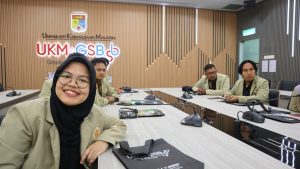
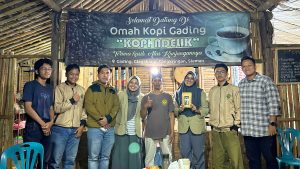
For Devira, one of the clearest differences between undergraduate and graduate study lies in the atmosphere of learning itself. During her undergraduate years, she felt that classes were still largely focused on theory. At the time, she also saw herself as someone who was still quite hesitant to ask questions or speak up in discussions. Even so, those years still gave her many memorable experiences through practicums and field activities.
Once she entered graduate school, she began to understand that students are expected to be much more proactive. The classroom environment also felt more dynamic because students came from different backgrounds. Some were fresh graduates, while others had already been working. For Devira, that mix created a space where she could learn from many perspectives and slowly become more confident in joining discussions.
She also found that several assignments in graduate school felt much closer to real situations. In some courses, students were asked to go directly into the field to interview farmers and cooperatives, then turn those findings into papers. That kind of experience made learning feel more alive and more connected to what happens beyond the classroom.
Another part of graduate school that stayed with her was the learning environment at MMA itself. She met many classmates who each had their own strengths, and over time, she also felt a sense of closeness not only with peers in her cohort, but also with seniors, juniors, and lecturers.
For Devira, that closeness shaped a different kind of learning experience. Many of the things she gained did not only come from formal class materials, but also from small conversations and everyday interactions throughout her study journey. From there, she felt she was constantly gaining new insights.
Thinking About What Comes Next
When asked about her plans after graduation, Devira said that the path ahead may still change. For now, however, she wants to gain work experience first, especially in areas that remain close to the academic world. At the same time, she also hopes to prepare herself for doctoral study as a next step for the future.
That is also one reason why fast track feels meaningful to her. It is not only about finishing sooner, but about preparing earlier for the direction she hopes to take.
Through her experience, Devira shows that university life is not only about completing one degree after another. It is also about learning how to grow, preparing for what comes next, and slowly understanding the direction one wants to take. For her, fast track has become part of that process.
Through Devira’s fast track journey, it becomes clear that higher education is not only about finishing academic milestones, but also about learning, preparing oneself, and expanding one’s perspective. In that sense, her experience reflects SDG 4: Quality Education, while her academic focus on agribusiness, commodity competitiveness, and value addition also connects with SDG 2: Zero Hunger and SDG 9: Industry, Innovation and Infrastructure. At the same time, her effort to prepare for both academic and professional paths also speaks to SDG 8: Decent Work and Economic Growth.
Interested in learning more about the fast track program or MMA UGM?
Visit the program’s official website for academic information, student activities, and the latest updates.